Platelets · Plasma · Double red cells

Apheresis donation & eligibility.

Ready to take the next step to have a bigger impact with your blood donation? Learn more about apheresis donations.

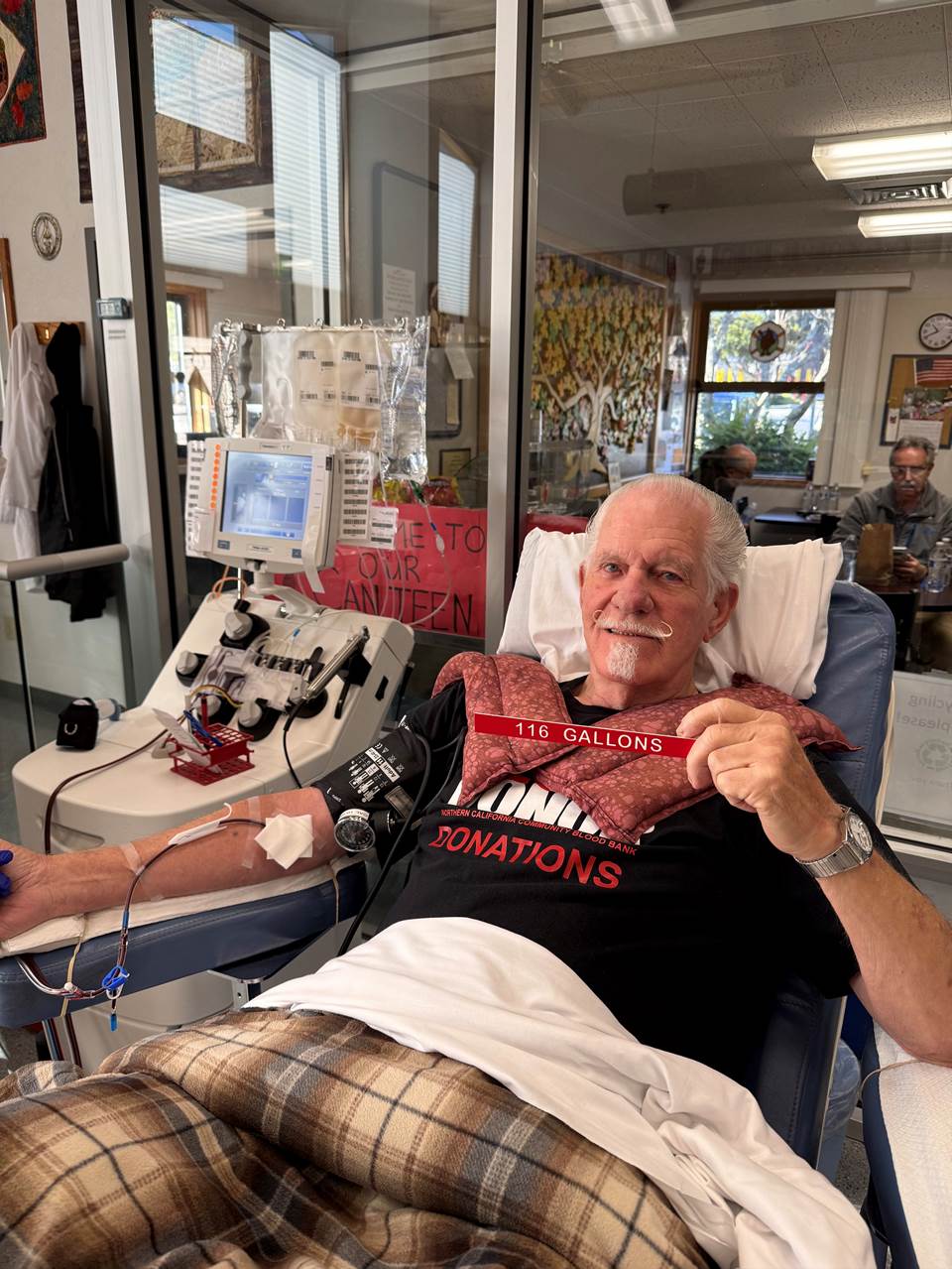
A longtime local donor giving plasma on the apheresis machine at our Eureka donor center

Apheresis appointments are scheduled by phone

Our online scheduler handles whole blood donations only. To book a platelet, plasma, double red cell, or therapeutic appointment, call our Welcome Center at (707) 443-8004 and we'll find a time that works for you.

Apheresis donations

One donor. Multiple lifesaving components.

Apheresis uses a special machine to separate your blood into its individual components — platelets, plasma, or packed red blood cells — mixed with anticoagulant in a sterile tubing set. By targeting a specific component, we can collect a larger volume of the intended product, and each donation can yield several doses of lifesaving blood products.

Platelet Donation

~2 hoursEvery 7 days · up to 24× per year

Platelets help control bleeding and are used in large quantities by leukemia, cancer, aplastic anemia, and marrow transplant patients, and during surgery to help stop bleeding. Because platelets have a shelf life of just five days, a constant supply is critical — and your body replenishes them quickly.

  • Must meet standard whole-blood donation requirements
  • No aspirin in the 48 hours before donating
  • No antiplatelet medications (see Medication Deferral List)
Plasma Donation

~1 hourEvery 28 days

Plasma is the liquid portion of your blood, used to treat bleeding, clotting problems, and trauma, and transfused to organ transplant recipients and premature infants. AB-positive and AB-negative donors are especially encouraged — AB plasma is the universal plasma type and can be transfused to anyone.

  • Universal plasma type: AB donors are always in demand
  • The Northern California Community Blood Bank collects plasma for transfusion
  • Volunteer donors only, like all transfusable blood in the U.S. — local patients are prioritized

Double Red Blood Cell Donation

~30 minutesEvery 112 days · up to 3× per year

Twice the typical amount of red blood cells are collected and the remaining plasma is returned to you. Oxygen-rich red blood cells are most often used for surgery and trauma patients.

  • Higher hemoglobin and height/weight requirements apply
  • 112-day deferral between donations
  • Maximum of three double-red donations per year

Tips for your apheresis donation

Just like preparing for a whole-blood donation, eat well and drink plenty of fluids. Avoid fatty foods — fatty or processed meats, deep-fried foods, full-fat cheese, cream-based soups — because fats in plasma and platelets can interfere with testing. Calcium-rich foods can help reduce symptoms associated with the anticoagulant used during collection. Please tell our staff about any discomfort during your donation; we're here to make it as comfortable as possible.

Paid plasma? Not here.

Plasma can be turned into lifesaving medicines like albumin and immunoglobulins through a process called fractionation — most of it done in Europe, where donor shortages mean plasma is imported from the U.S. Because for-profit plasma centers collect plasma for further manufacture rather than direct transfusion, donor standards are significantly different, and those centers are allowed to pay their "donors."

The Northern California Community Blood Bank collects plasma for transfusion and does not pay donors.

Eligibility

Requirements specific to apheresis

Apheresis donors meet all the standard donation requirements, plus a few extras that depend on the procedure. Our staff reviews everything with you at screening.

Platelet donation

  • Meet all standard whole blood requirements (at least 16 years old, at least 110 lbs, good general health)
  • No aspirin or aspirin-containing products for 48 hours before donating
  • No antiplatelet medications such as Plavix, Brilinta, or Effient
  • Good vein access in one arm — the procedure uses a single arm
  • Platelet count within acceptable range at screening
  • Wait at least 7 days between platelet donations, up to 24 times per year

Plasma donation

  • Meet all standard whole blood requirements
  • AB-positive and AB-negative donors are especially needed — AB plasma can go to any patient
  • Wait at least 28 days between plasma donations
  • Certain pregnancy and transfusion histories may affect plasma eligibility

Double red cell donation

  • Higher hemoglobin requirement than whole blood
  • Height and weight minimums apply and differ by sex
  • Wait 112 days between donations — a maximum of three per year
  • Not combined with other red cell donations inside that window

Donors who have been pregnant may require additional testing before donating platelets or plasma. Please call us to learn more.

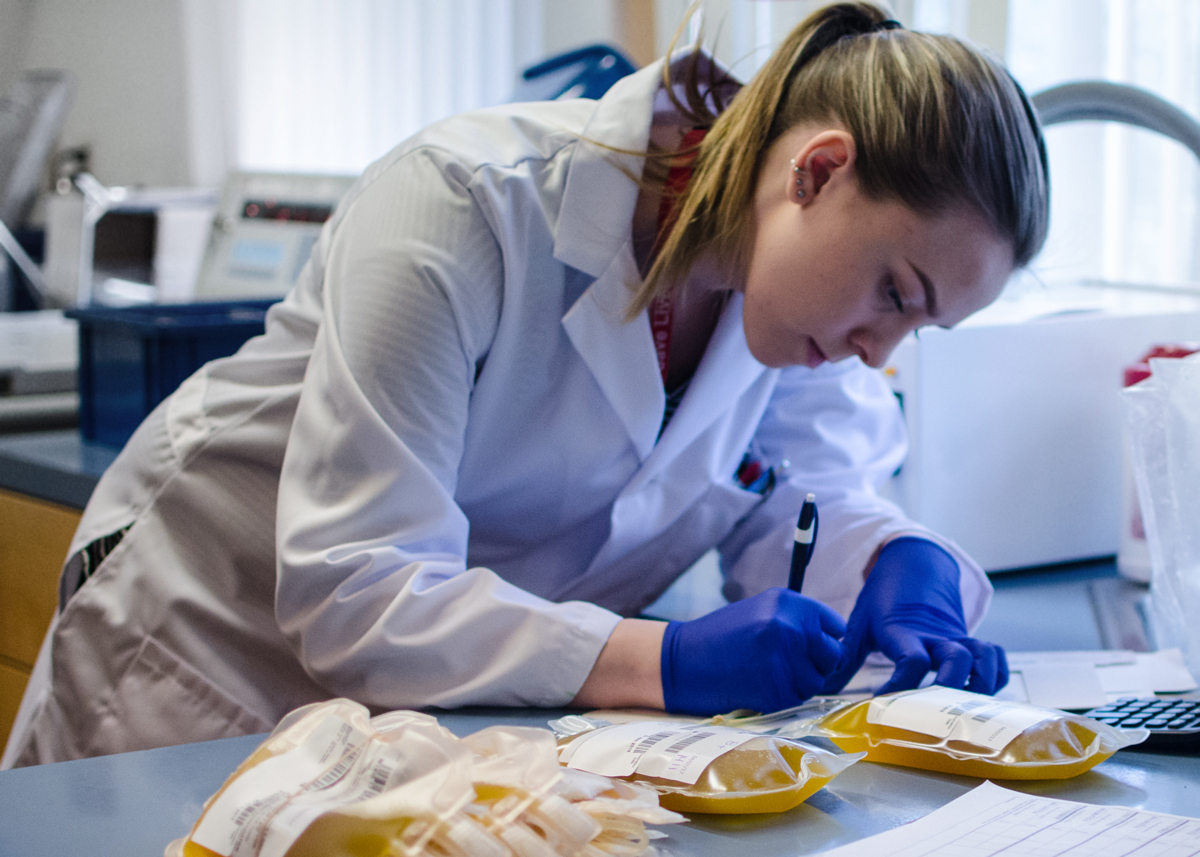
A clinical laboratory scientist handling separated plasma units

What the visit is like

Longer in the chair, bigger in impact.

  • Plan on 1 to 2 hours depending on the procedure — bring a book, headphones, or stream something on our screens.
  • Blood is drawn, separated, and the components you aren't donating are returned to you, usually through the same arm.
  • Eat a full meal and drink plenty of water beforehand; calcium-rich foods help with the mild tingling some platelet donors notice.
  • Questions about whether apheresis is right for you? Call us at (707) 443-8004.

Ready when you are

Book your appointment today.

Call our donor line or make an appointment online. Walk-ins are welcome at our Eureka donor center and every mobile blood drive, but appointments are encouraged and guarantee your preferred time.

Donor center hours
  • Monday8 AM – 6 PM
  • Tuesday8 AM – 6 PM
  • Wednesday8 AM – 7 PM
  • Thursday8 AM – 6 PM
  • Friday8 AM – 4 PM
  • Sat & SunClosed
2524 Harrison Ave
Eureka, CA 95501